AlterSelf – AI-Powered Productivity Ecosystem for Neurodiversity
Intelligent Task Management, ADHD-Focused Support, and Scalable Architecture
Overview
A comprehensive productivity platform designed for individuals with ADHD, featuring AI-driven scheduling, routine management, and cross-platform accessibility.
Technologies Used
Overview
AlterSelf is a mission-driven project aimed at redefining how individuals with ADHD manage their daily lives.
As a co-founder and lead full-stack developer, I was responsible for the end-to-end technical execution of the platform.
The core challenge was to move beyond simple "to-do lists" and create an ecosystem that actively supports the user through AI-driven insights, routine automation, and seamless integration with existing tools like Google Calendar.
The Challenge
Traditional productivity tools often fail neurodivergent users because they:
- Lack context about the user's energy levels and executive function.
- Rely on manual input that becomes a burden.
- Don't differentiate between daily routines, one-off tasks, and long-term goals.
- Lack proactive assistance.
Our goal was to build a system that acts as a "second brain," reducing cognitive load through intelligent automation.
The Solution
I designed and implemented a multi-layered ecosystem consisting of a high-performance backend, a responsive web/mobile frontend, and a native mobile application.
Key Features
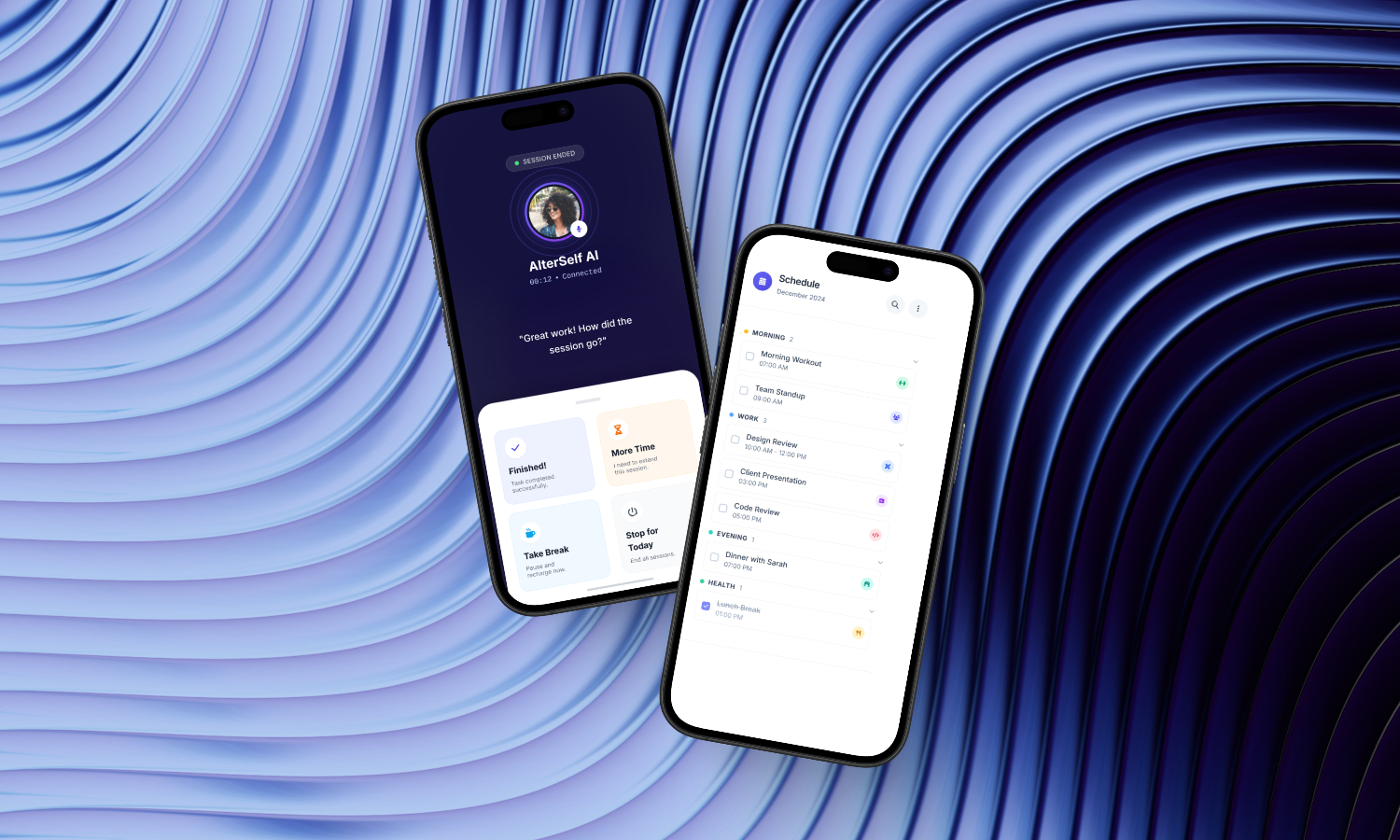
- AI-Driven Scheduling: An intelligent agent that analyzes the user's calendar and task list to suggest optimal times for work and rest.
- Multi-Type Task Management: Specialized workflows for Todos (one-off), Routines (habits), and Long-term Tasks (goals).
- Context-Aware Reminders: Leveraging telemetry and calendar data to provide meaningful prompts at the right moment.
- Cross-Platform Synchronization: A unified experience across web, mobile (Capacitor), and native (Flutter) clients.
- VoIP Integrations: Experimental features for voice-based task interaction.
Technical Architecture
The project follows modern software engineering best practices to ensure scalability and maintainability.
Backend (Deno & TypeScript)
The backend was built using Domain-Driven Design (DDD) and Hexagonal Architecture. This allowed us to keep the business logic isolated from infrastructure concerns (like database choices or external APIs).
- Stateless API: High-concurrency processing with Deno.
- Custom API Registry: A robust system for managing endpoints and their metadata.
- Event-Driven Patterns: Handling task occurrences and completions asynchronously.
Frontend (Vue 3 & Tailwind CSS)
The frontend was designed with a focus on accessibility and responsiveness.
- State Management: Using Pinia for predictable data flow.
- Component Library: A custom-built library of reusable UI components shared across modules.
- Responsive Design: Optimized for both mobile devices and desktop browsers.
Infrastructure & DevOps
I managed the entire infrastructure stack, ensuring high availability and secure deployments.
- VPS Cluster: Hosting the backend and frontend registries.
- Dockerized Deployments: Consistent environments across development and production.
- CI/CD: Automated testing and deployment pipelines via GitHub Actions.
Results
AlterSelf successfully evolved from a conceptual prototype to a working ecosystem capable of handling complex task hierarchies and AI integrations. The use of DDD and Hexagonal Architecture proved invaluable as the project grew, allowing for rapid iteration of features without compromising system stability.