Infermedica Triage – AI-Powered Virtual Triage Solution
Intelligent Symptom Assessment and Patient Navigation
Overview
A world-class diagnostic solution that helps patients understand their symptoms and guides them to the right level of care using AI and a vast Medical Knowledge Base.
Technologies Used
Overview
During my time at Infermedica, I was part of the engineering team building the Triage module—a flagship product used by healthcare organizations worldwide to automate patient intake and navigation.
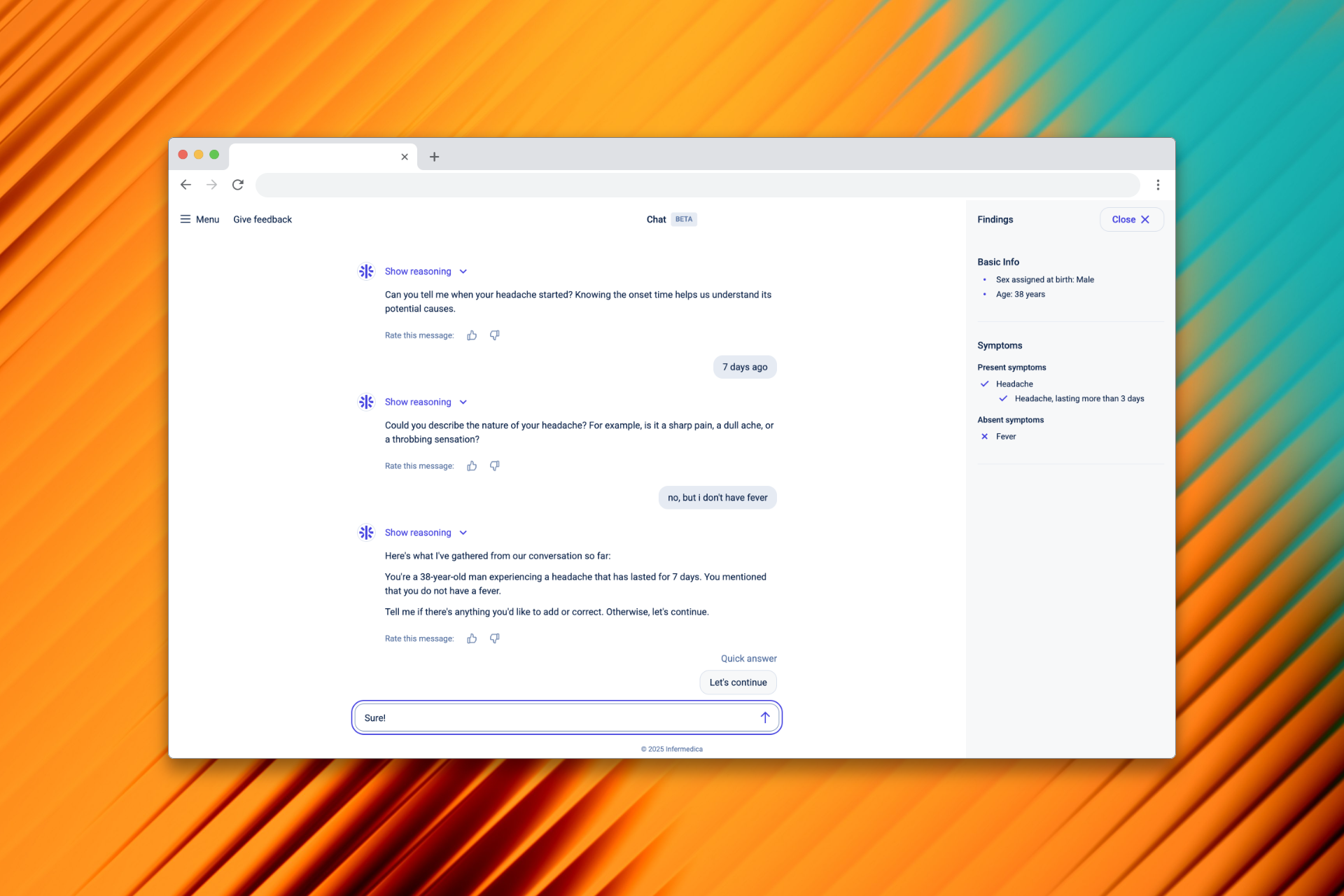
The system uses advanced AI and a curated Medical Knowledge Base to conduct dynamic symptom-assessment interviews, providing users with instant triage recommendations and educational content.
The Business Challenge
Healthcare providers face a massive influx of patients, many of whom are unsure about the level of care they need. This leads to:
- Overcrowded emergency departments (ED).
- Long wait times for patients with urgent needs.
- High administrative burden on medical staff.
- Inconsistent symptom reporting.
The goal was to provide a "Digital Front Door" that could accurately assess symptoms 24/7 and refer patients to the most appropriate service (telemedicine, primary care, or emergency).
The Solution
We built a highly configurable, multi-platform triage solution that leverages Natural Language Processing (NLP) and probabilistic modeling to simulate a doctor's initial interview.
Key Features
- Intelligent Survey: A dynamic interview that adapts based on user input, risk factors, and demographic data.
- NLP Integration: Understanding free-text symptom descriptions to initiate the assessment.
- Triage Recommendations: Providing one of five care levels (e.g., Self-care, See a doctor, Emergency) based on clinical protocols.
- Medical Education: Access to evidence-based articles reviewed by medical doctors.
- Multi-language Support: Available in over 26 languages to serve a global audience.
Technical Contributions
My role involved working across the stack to ensure the platform's reliability, scalability, and clinical accuracy.
Backend & API Development
- Developed and optimized APIs using Python and FastAPI.
- Contributed to the Inference Engine integration, handling complex probabilistic models for symptom analysis.
- Implemented and managed vector stores to enhance NLP capabilities and condition matching.
Architecture & Infrastructure
- Worked within a microservices architecture deployed on Google Cloud Platform (GCP) using Kubernetes.
- Ensured compliance with strict healthcare standards, including HIPAA and GDPR.
- Integrated CI/CD pipelines to maintain high code quality and deployment frequency.
Frontend Integration
- Developed responsive UI components in Vue.js for the white-label version of the symptom checker.
- Ensured the interface was accessible and followed medical device UI standards.
Impact & Results
The Infermedica Triage solution has delivered significant real-world value:
- 35% Increase in completion rates for major national health services.
- 39% Improvement in operational efficiency for clinical providers.
- Reduced ED visits by correctly identifying patients who can be treated via telemedicine or self-care.
- MDR Class IIb Certification, proving the clinical safety and effectiveness of the solution.